
About the project
Why myzxintptz treats water crossings as real transport
We started by writing notes for our own ferry days — and kept going when those notes became more useful than brochure photos.
Here is how the project grew, how we verify schedules and pier details, how a consultation is structured, and how we choose partners who share a practical view of boarding and transfers.
Origin
How a stack of crossing notes became a guidance practice
The first drafts were private checklists: when to leave for the pier, which deck stayed warmer in a headwind, and how long the walk really took after docking. Friends asked for copies. Then travelers who were not on our trips asked for the same clarity before they locked a sailing.
We chose water routes because they sit between romance and logistics. A crossing can be the best part of a day and still fail if the timetable is outdated or the transfer buffer is too thin. That tension needed a calm, observational voice rather than a glossy tour pitch.
myzxintptz grew from those field notes into consultations and published guides. We still ride ferry, river, and lake segments as working travelers. We compare what operators publish with what happens at the gate, then translate the gap into steps a reader can use.
The focus stays narrow on purpose. We do not try to cover every kind of trip. We stay with the water leg — schedules, weather holds, onboard choices, baggage habits, and the first land connection after the ramp — because that is where most plans quietly break.
Editorial method
How we gather, check, and rewrite before anything goes public
Every guide begins with a route question we can answer in concrete steps. We collect operator notices, seasonal PDFs, and pier access notes, then mark which sources conflict. A claim only stays in the draft if we can point to a current source or a repeated field observation.
We ride the segment when possible, or speak with travelers who completed it recently under similar conditions. We ask about boarding windows, luggage handling, motion on deck, and what happened when wind delayed departure. Anecdotes are welcome; unverified certainty is not.
Before publication we rewrite for action: what to verify, what to pack in a hand bag, and what to do if the sailing is held. Soft adjectives get cut. If a detail may change between seasons, we say so and tell readers where to reconfirm.
After release we revisit materials when operators shift schedules or when clients report a new pier pattern. An outdated tip is removed rather than left as atmosphere.
Consultation flow
From first message to a crossing plan you can follow
A consultation is a structured exchange, not a vague inspiration chat. These steps show how we move from your constraints to a usable water-leg plan.
-
Scope the water segment
You share dates, party size, whether you bring a vehicle or bicycle, and which land connections must hold. We define what the water leg must achieve inside the wider itinerary.
-
Compare live timetable options
We check current seasonal tables, note known maintenance windows, and list sailings that leave enough buffer for pier walks and the next bus, train, or road leg.
-
Build weather-hold backups
For exposed routes we outline how to monitor cancellation risk and what alternative daytime sailing or land detour keeps the trip intact if the first option is pulled.
-
Deliver a boarding brief
You receive a clear brief: arrival window, cabin or salon notes, what stays in hand luggage, and the first transfer after docking — written so it still works without our call open.
Traveler principles
How we ask guests to treat crews, shared decks, and shore places
Crossing well is not only about personal comfort. Ports and decks are shared workplaces. These principles guide the advice we give.
- Respect boarding pace
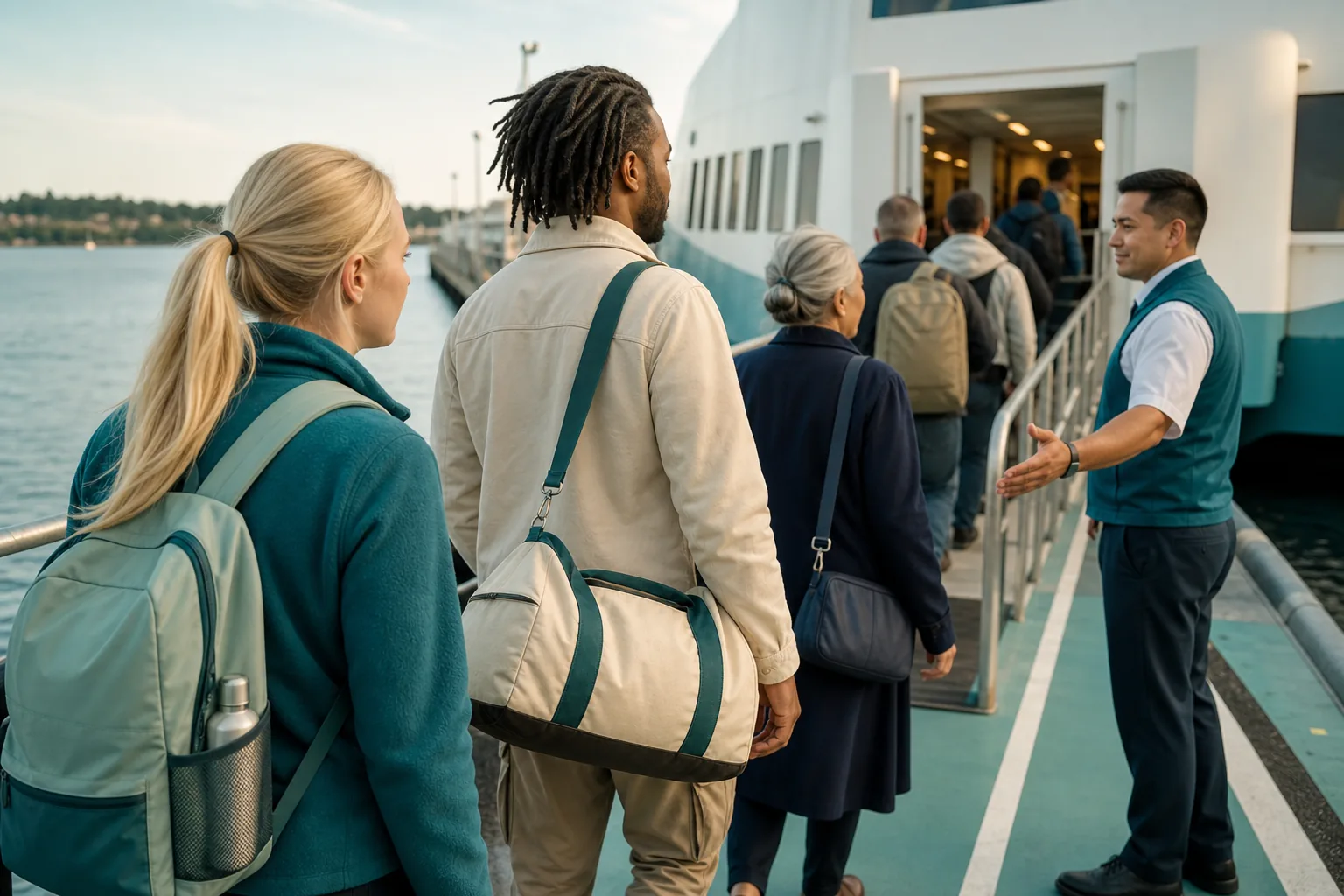
- Arrive inside the published window. Do not argue for special access when vehicle lanes or foot queues are already moving. Crew instructions override personal timing guesses.
- Keep decks usable
- Store bags where they do not block doors, life equipment, or seating. Outdoor chairs and rails are shared; leave space for people who need motion air or a quieter corner.
- Treat the pier as a workplace
- Terminals are not photo sets. Stay clear of loading zones, follow marked pedestrian paths, and leave noise levels reasonable for overnight arrivals and early departures.
- Verify before you assume
- Local transfer hours and pier facilities change. Confirm details with operators again before you travel, even if you used the same route on an earlier trip.
Partnerships
How we choose operators and research allies
We work with a small set of partners who share clear public information and treat passengers as travelers with onward plans, not as a captive audience for deck photography.
“A useful partner answers timetable questions in plain language, publishes hold notices where travelers can find them, and respects that the crossing is one link in a longer day.”
myzxintptz partnership review note
-
Northwake Schedule Cooperative
Independent archive of seasonal ferry tables and change logs we use to spot when a circulating PDF no longer matches the live board.
-
Harborlane Transfer Desk
Local coordinators who map walk times from ramp to bus bays and note when evening land services end earlier than the last docking.
-
Blue Berth Field Group
Practitioners who document cabin layouts, salon drafts, and overnight seating patterns after repeated sailings on the same vessels.
We decline partnerships that push unverifiable claims, hide cancellation processes, or ask us to soften practical warnings for marketing tone. Clarity for the traveler stays first.
Want help with a specific crossing?
Share the water segment you are considering. We will help you weigh timetable options, boarding windows, and the land connection that follows.
Contact UsWhat to expect
A focused exchange about your route constraints, not a generic travel pitch. You leave with clear next steps you can verify with operators before departure.
Read the latest crossing notes
Our articles dig into timetable reading, overnight choices, pier transfers, and first-sailing checklists — written in the same practical voice as our consultations.
Information notice
This site publishes material for informational and educational purposes related to ferry, river, and lake travel planning. myzxintptz offers consultations and guidance about water segments within a wider itinerary.
Schedules, pier access, boarding rules, and onboard conditions may change between sailings. Operating hours, terminal layouts, and local transfer options may differ from earlier visits, so verify details directly with operators and local providers before you travel.
We recommend speaking with qualified travel or transport specialists when your route involves complex transfers, overnight passages, or vehicle boarding. Any decisions you make based on site content remain your responsibility.