Building reliable pier transfers after you dock
Docking is only half the journey; the walk to your next bus, train, or ride decides whether the day still holds. Here is how to measure that path honestly, build a buffer that survives late docking, and spot evening services that end too early. The aim is a transfer you can trust without sprinting.

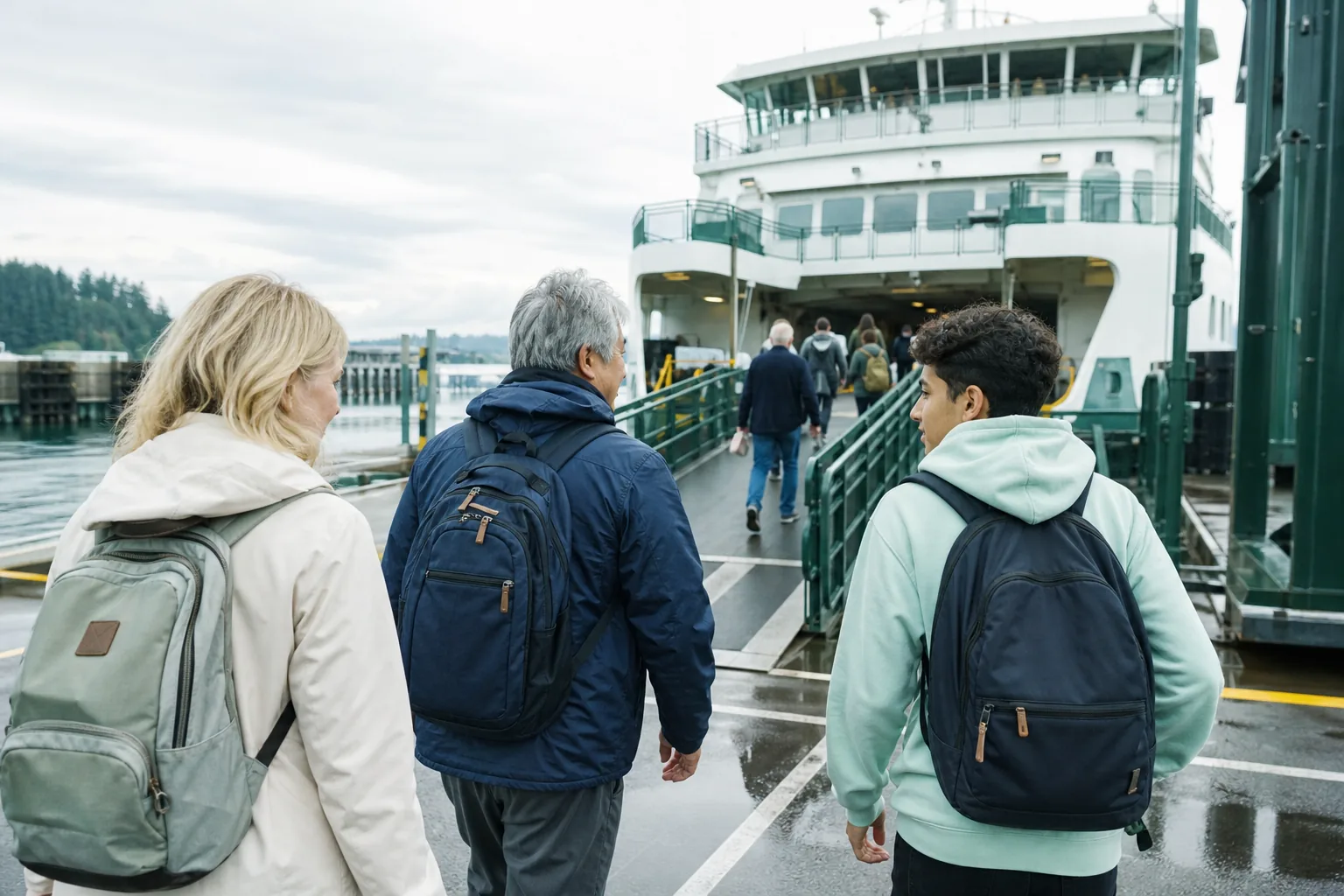
The sailing ends when the ramp touches the pier, but your day does not. Transfers fail more often on land than on water: a walk that looked short on a map, a bus that left earlier than the last docking, or a terminal exit that spills you into the wrong side of the harbor. Reliable pier transfers are built before you board, then confirmed again as you leave the vessel.
This guide focuses on the stretch between the ship’s door and your next land mode. Measure it honestly, protect it with a buffer, and treat evening schedules as fragile until you prove otherwise.
Measure walking time the way your body will feel it
Map distance is not walking time with a suitcase in hand. Stairs, wind, crowds, and poorly marked paths stretch minutes. If you can, check a recent pier diagram or a traveler note that mentions the ramp-to-road path. If you cannot, assume the walk is longer than the straight line and add time for finding the correct exit.
Travelers who move slowly — with children, heavy bags, or limited mobility — need an even wider margin. The goal is not to sprint from ship to shelter. The goal is to arrive at the bus bay or train gate without panic.
“A transfer is reliable when the slowest person in your group can still make it without running.”
Build a buffer that survives real docking
Ferries can dock a little early or a little behind. Disembarkation can stall while vehicles clear. Your buffer has to absorb both. A thin connection that looks perfect on paper often collapses when the queue at the door moves slower than expected.
- Note the published arrival and the last practical land departure you must catch.
- Subtract walking time from ramp to stop, then subtract a further cushion for crowds and wrong turns.
- If the remaining gap is thin, choose an earlier sailing or a later land connection.
- Identify one backup option: a later bus, a taxi stand, or a place you can wait safely if everything slips.
Evening services end earlier than you hope
Many harbors quiet down after the last regular commute wave. A ferry may still arrive late in the evening while the bus that serves the pier has already finished. Always check land timetables for the same day type as your sailing — weekday and weekend patterns differ.
If your plan depends on a late connection, confirm it twice: once when you book the water leg, and again before you leave for the pier. If the land option looks uncertain, redesign the day around an earlier docking instead of gambling on a thin evening link.
Signs your buffer is too small
- You need everything to run on time for the plan to work.
- The walk includes stairs or an unmarked path through a yard.
- Your group cannot move quickly with the bags you are carrying.
- The only backup is “hope a taxi appears.”
What to do in the final minutes before docking
Pack before the announcement, not while it plays. Keep tickets and transit cards reachable. Agree on a meeting point if your group splits on different decks. When the doors open, follow marked pedestrian routes and ignore shortcuts through vehicle lanes.
Once outside, orient before you walk. Find the shelter, the posted land timetable, and the direction into town. If you missed a connection, use your backup calmly rather than improvising in the roadway.
At myzxintptz, transfer planning is part of every crossing brief we prepare. If you want a second set of eyes on a fragile pier link, share your sailing window and the land service you hope to catch, and we will help you test whether the buffer is real.
Vehicles, bicycles, and different exit speeds
Foot passengers, cyclists, and drivers leave on different clocks entirely. If your group mixes modes, do not assume you will reunite at the bottom of the ramp. Set a meeting point beyond the vehicle lanes, such as a shelter or ticket hall, and wait there instead of standing in a dangerous gap between moving cars.
Cyclists should confirm where bikes are stored and how long it takes to reclaim them after docking. Drivers should expect to wait for deck clearance instructions. Build the transfer around the slowest reclaim process in your party, not the fastest walker.
When you travel alone with only a day bag, you can aim for a tighter connection — still with a real buffer, just not as wide. When you travel with luggage that needs both hands, protect the walk as carefully as you protect the sailing itself.
Turning a fragile link into a stable plan
If your itinerary only works with a thin pier transfer, change the itinerary. Move the water leg earlier, overnight near the harbor, or pick a land service with higher frequency. A beautiful sailing is still a poor choice if it regularly dumps travelers into a dark terminal with no onward option.
Reliable transfers are quiet when they work: you dock, you walk, you board the next mode with time to spare. That quiet outcome is designed, not lucky. Measure the path, respect evening cutoffs, and keep a backup you are willing to use.
After a few successful transfers, you will start recognizing patterns: which piers dump you far from town, which ones place shelters next to the ramp, and which evening services are truly dependable. Keep a personal list. It becomes as useful as any published guide because it reflects the harbors you actually use.
When something fails — a missed bus, a longer walk, a closed exit — record what broke. Was the published walk optimistic? Did docking run late? Did the land timetable change for the season? Those answers improve the next plan more than general advice ever will.