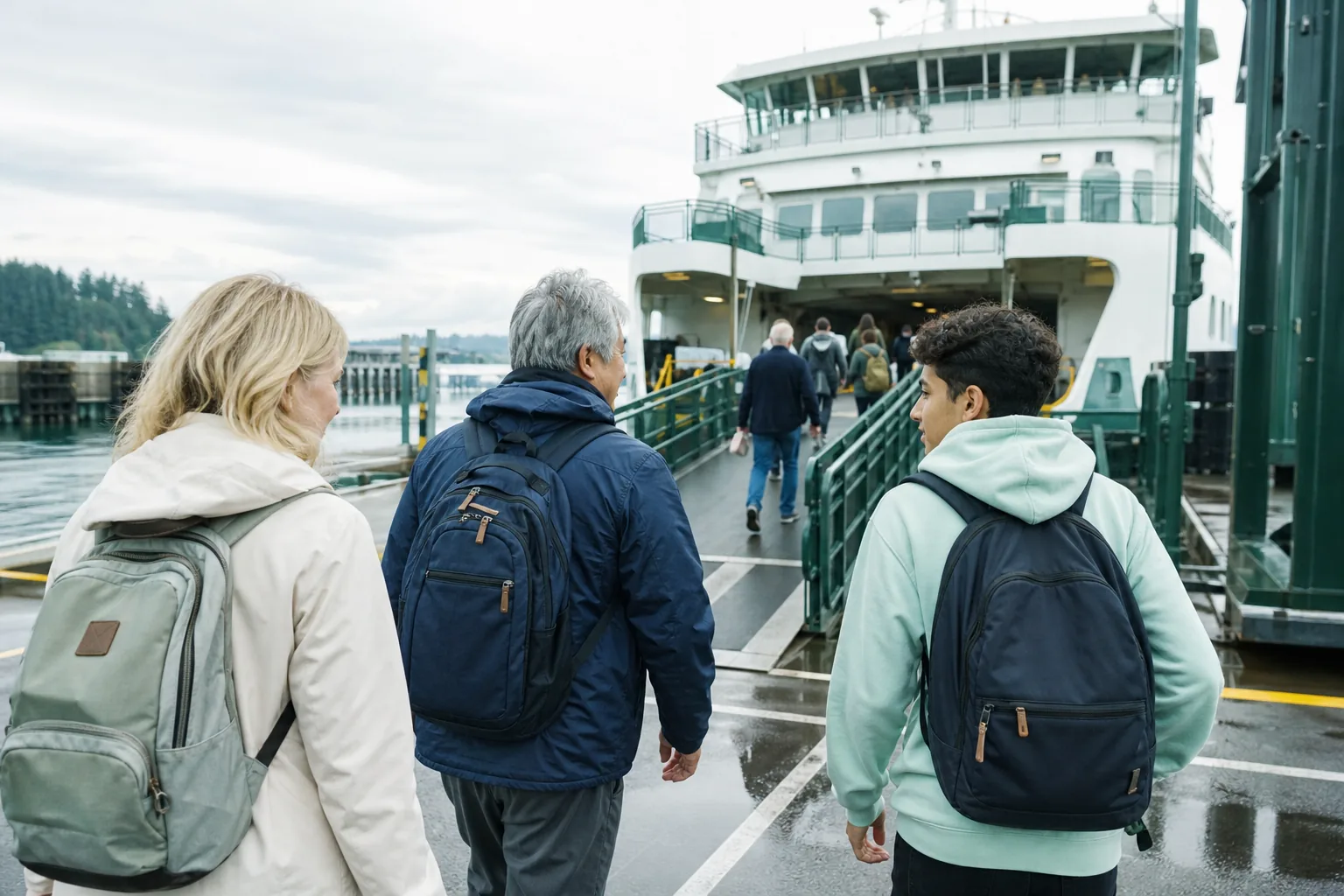
Cabin, seat, or deck: choosing sleep on an overnight crossing
Overnight crossings are less about finding perfect silence and more about choosing the rest you can actually get aboard. This guide compares cabin, seat, and deck options, shows what belongs in a night bag, and explains why early arrivals reshape the next land leg. Use it to match sleep to the morning you need.
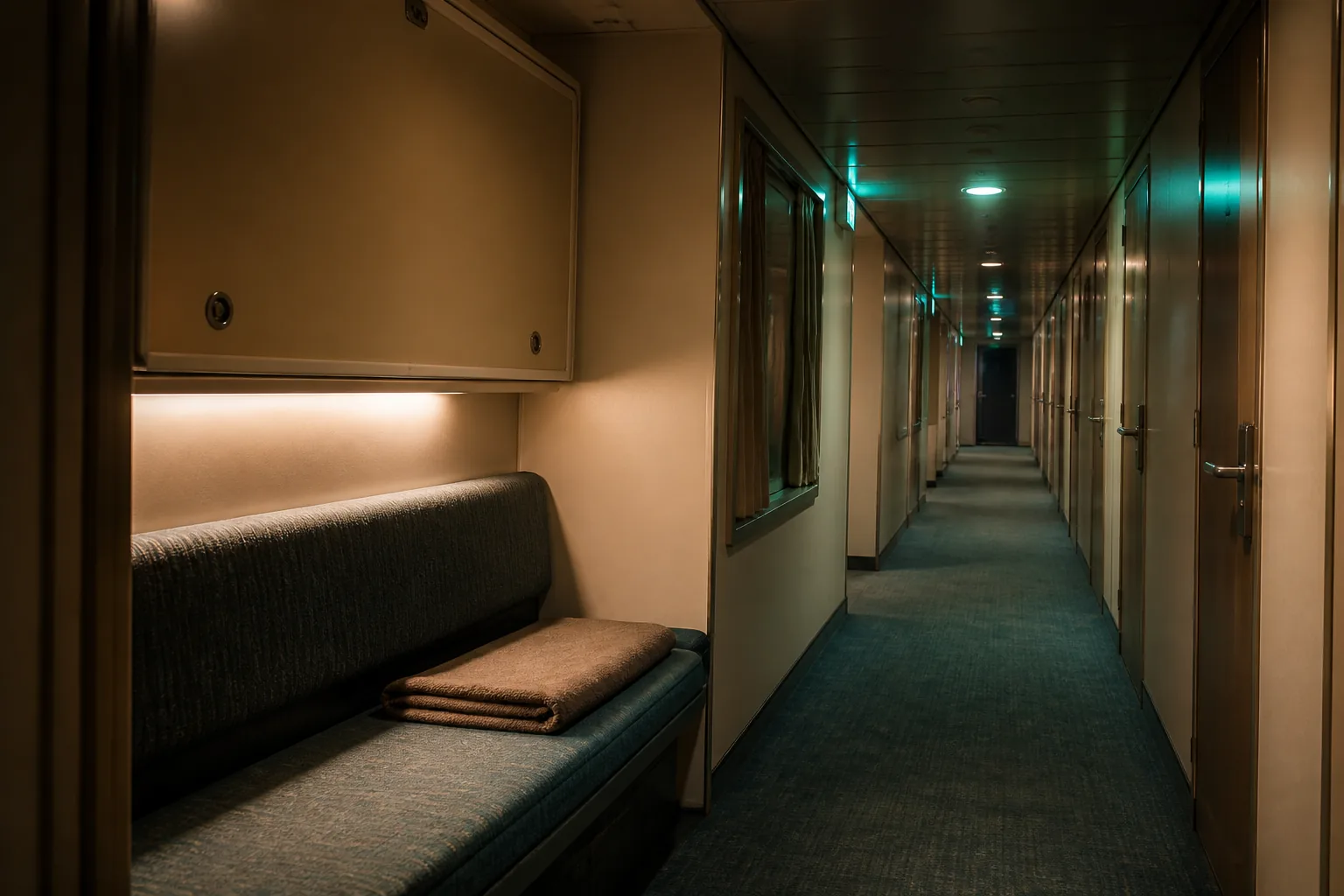
Overnight water crossings ask for a different kind of honesty. You will not sleep the way you sleep at home, and the choice between cabin, reclining seat, or open deck changes how much rest you can realistically expect. This guide compares those options as working decisions, not as marketing categories.
Before you book any overnight space, decide what the morning after must look like. If you need a clear head for a tight land transfer, pay for the option that protects stillness. If the next leg is flexible, a seat can be enough. The wrong choice is not immoral — it is simply expensive in fatigue.
What “sleep” usually means on a night sailing
Most travelers overestimate how continuous overnight rest can be. Ships vibrate. Doors open. Announcements cut through thin walls. Even a good cabin is a moving room with shared corridors outside. A reclining seat adds light, conversation, and people walking past your knees. Deck space adds wind, cold, and the need to guard belongings.
Treat the night as structured rest rather than a hotel stay. Plan for broken sleep in blocks. Pack for temperature swings. Accept that arrival may come before you feel ready. That mindset prevents disappointment and keeps your morning plan safer.
“Book the night for the morning you need, not for the fantasy of uninterrupted sleep.”
Cabin: when privacy is worth the trade
A cabin gives a door, a place to lie flat, and somewhere to put a night bag without watching it every minute of the crossing. That privacy matters if you travel with children, need to change clothes, or simply recover better in darkness. It also costs more and can sell out early on popular sailings.
Cabins still have limits. Shared bathrooms may sit down the corridor. Engine noise can be louder in lower decks. Early docking announcements will reach you whether you feel rested or not. Ask yourself whether lying flat is the difference between a workable morning and a ruined one.
Cabin habits that help
- Keep documents, layers, and medication in a small bag by the berth.
- Set your own soft alarm in case corridor noise does not wake you cleanly.
- Drink water before sleep and avoid relying on an empty buffet.
- Know the walking path from cabin to exit before you turn in.
Reclining seat: rest with open eyes nearby
A reserved seat is the middle option. You can tip back, keep bags close, and stay near exits. You will also hear conversations, feel aisle traffic, and see lights that never fully go dark. For many adults on a single night crossing, this is acceptable if the morning transfer is gentle.
Choose a seat with a clear escape route and enough room for your legs. Avoid placing your only valuables in an overhead space you cannot watch. Bring a scarf or light layer for drafts and a way to soften light without blocking crew visibility of the cabin or salon rules.
Deck space: only with a clear reason
Open deck sleep looks free and simple until wind rises or rain starts. It can work for short warm-season nights if you have weatherproof layers, a dry seat area, and no fragile morning schedule. It is a poor default for first overnight travelers.
If you choose deck space, treat it as a contingency with an indoor fallback. Know where the salon is. Keep your bag as a pillow you can move quickly. Do not assume outdoor seating will remain empty or dry through the night.
Build a night bag before you board
The night bag is the difference between a manageable crossing and a restless hunt through luggage. Pack only what you will touch between departure and docking. Everything else can stay sealed.
- Layers for deck drafts and air-conditioned salons.
- Ear protection and an eye cover if rules and comfort allow.
- Water, a simple snack, and any medication you need overnight.
- Documents, tickets, and the next land-transfer details.
- A small light for cabin corridors without blinding others.
Early-morning arrivals change the whole plan
Many overnight sailings land before town services feel open. Cafes may be closed. Buses may run on a thin early timetable. Vehicle decks take time to clear. If your plan assumes an immediate onward ride, verify that ride for the actual arrival window, not for a convenient mid-morning fantasy.
Give yourself a buffer after docking: time to gather bags, leave the pier without rushing, and reset before a demanding land leg. If the arrival is very early, consider a short rest stop near the harbor rather than forcing a long transfer on almost no sleep.
At myzxintptz, overnight briefs always include the morning after. If you are weighing cabin against seat for a specific sailing, tell us what must happen after you dock. We will help you match the sleep option to the next transfer, not to an idealized night on the water.
Choose deliberately. Pay for stillness when the morning is strict. Accept a seat when the day is flexible. Leave open deck sleep for rare conditions where weather, timing, and experience all support it. The right overnight choice is the one that lets you walk off the ramp ready for the route ahead.
Noise, motion, and how to prepare your body
Motion affects people in different ways. Some sleep through a steady engine hum and wake only for docking. Others feel every pitch outside the harbor. If you know you are sensitive, avoid stacking an overnight sailing immediately after a long land day. Arrive at the pier fed, hydrated, and early enough that boarding does not spike your stress.
Reduce stimulants late in the day. Stretch before you settle. Keep expectations modest: three or four short rest blocks can still leave you functional. If you wake at odd hours, walk a quiet corridor once, then return to your place rather than fighting the clock.
Travel companions should agree on quiet hours and bag locations before lights go down. Nothing erodes rest faster than whispered arguments about who holds the tickets or where the jackets went. Write the morning meeting point on a card in your night bag.
A practical decision framework
Use three questions. First: how hard is the morning transfer going to be? Second: how well do you sleep in public spaces? Third: what is the weather and vessel type likely to feel like overnight? If two of the three point toward needing privacy and a flat surface, prioritize a cabin while space remains. If all three are mild, a seat is often enough.
Revisit the decision when the sailing changes. A cancelled cabin allocation or a shifted arrival can turn a comfortable plan into a fragile one. Keep a backup: an earlier daytime option on another day, or a later land connection that tolerates a tired arrival.
Overnight crossings reward travelers who plan like operators: clear constraints, honest rest goals, and no romance about silence on a working ship. Make the sleep choice serve the itinerary, and the night becomes a usable transport segment instead of a gamble.
If you travel with a vehicle, overnight choices also affect deck access. Once the car deck is closed, you may not return to the vehicle until docking procedures begin. Anything you need at night must leave the car with you during boarding. That single rule prevents many frustrated trips back to a locked stairwell.
Families should assign roles before boarding: who carries the night bag, who watches children near rails, who keeps tickets. Fatigue makes small tasks feel large at three in the morning by ship time. Clear roles keep the cabin or seating area calmer.
After you dock: protect the first hour
The first hour ashore decides whether the overnight choice still looks wise. Move slowly through disembarkation. Drink water. Eat something simple if available. Confirm the land connection one more time before you leave the terminal area. If you feel unsafe to drive or navigate complex transfers, use the backup you prepared.
Write a short note while details are fresh: cabin noise level, seat comfort, deck conditions, and how early the arrival felt. Those notes make the next overnight booking faster and more accurate than generic advice from strangers.
Overnight water travel is ordinary transport when you plan it that way. Match the bed to the morning, pack a disciplined night bag, and give the arrival room to breathe. Do that consistently and night sailings stop feeling like leaps into the unknown.
Shared spaces and quiet etiquette overnight
Overnight vessels are workplaces and shared bedrooms at the same time. Keep voices low after people settle. Do not claim multiple seats with bags if the salon is full. If you must use a light, shield it. These habits are not decoration; they determine whether you and your neighbors get any rest at all.
If someone near you is struggling — motion sickness, a crying child, confusion about exits — give space and follow crew guidance rather than crowding the scene. Overnight crossings go smoother when travelers treat the ship as a temporary shared house with thin walls.