A calm first daytime ferry: what to rehearse before you board
A short daylight crossing is the best place to learn ferry rhythm before you commit to a night sailing at all. This guide walks through arrival windows, what to pack in hand, and how to notice motion and exits while the day is still bright. Use it as a rehearsal plan, not as a sightseeing script.
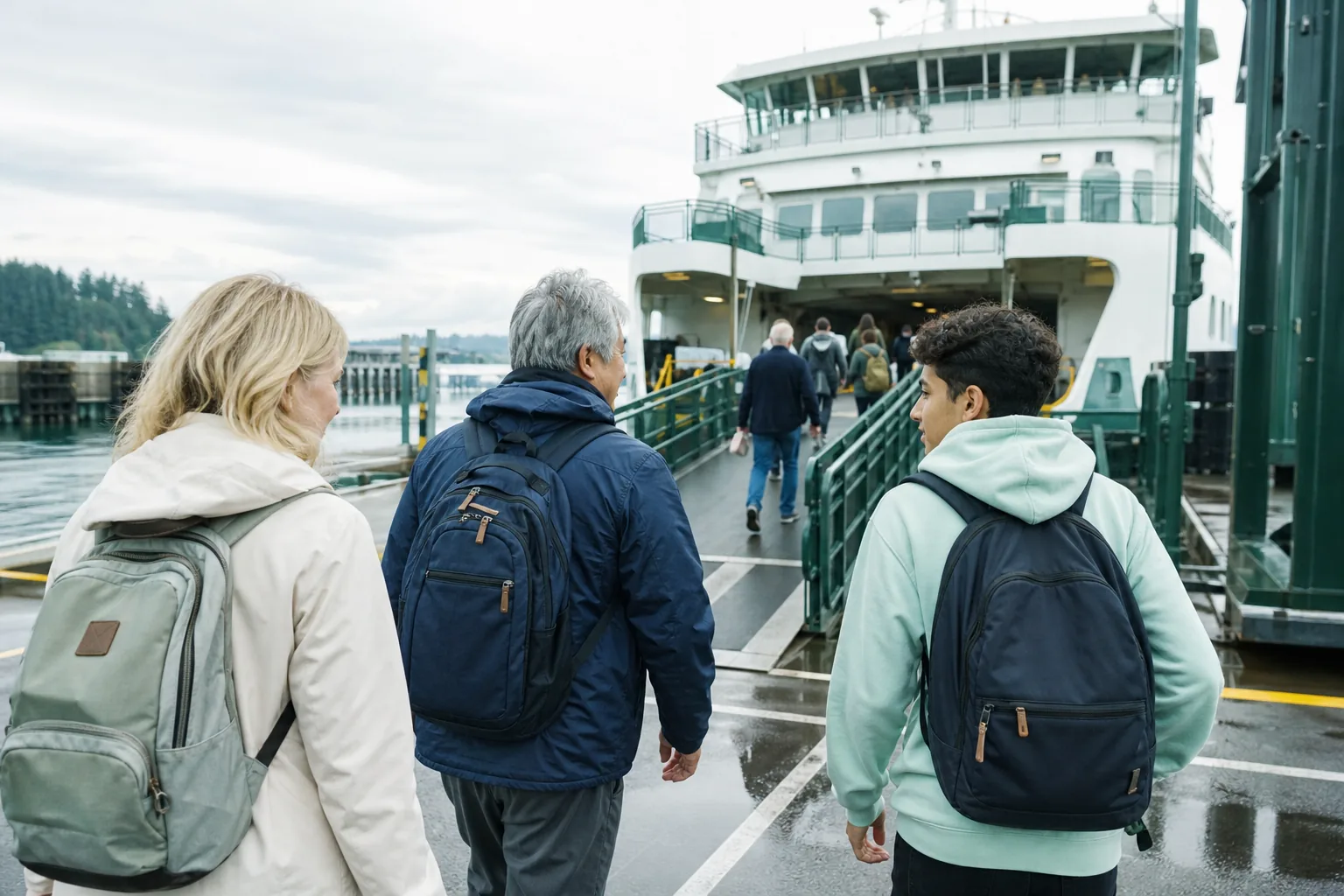
A first ferry crossing teaches more when you can see the water, watch how boarding lanes move, and still have daylight left for mistakes. Overnight sailings compress those lessons into a darker, noisier setting where every missed step feels larger. If this is your first water leg in a wider trip, choose a short daytime sailing and treat it as a rehearsal rather than a spectacle.
The goal is not to collect a romantic deck photo. The goal is to learn the rhythm of the pier: when foot passengers are called, where bags feel safest, how the vessel moves once you leave the shelter of the harbor, and how clearly the exit path appears when you dock. Those observations travel with you into longer routes.
Why daylight beats a night sailing for a first attempt
Daylight makes the terminal layout easier to read. You can see painted lanes, find the correct queue without guessing, and watch crew signals instead of relying only on announcements that may be hard to hear. You also notice motion earlier — the first swell outside the breakwater, the draft near open doors, the quieter corners of a salon — without the fatigue of an overnight schedule.
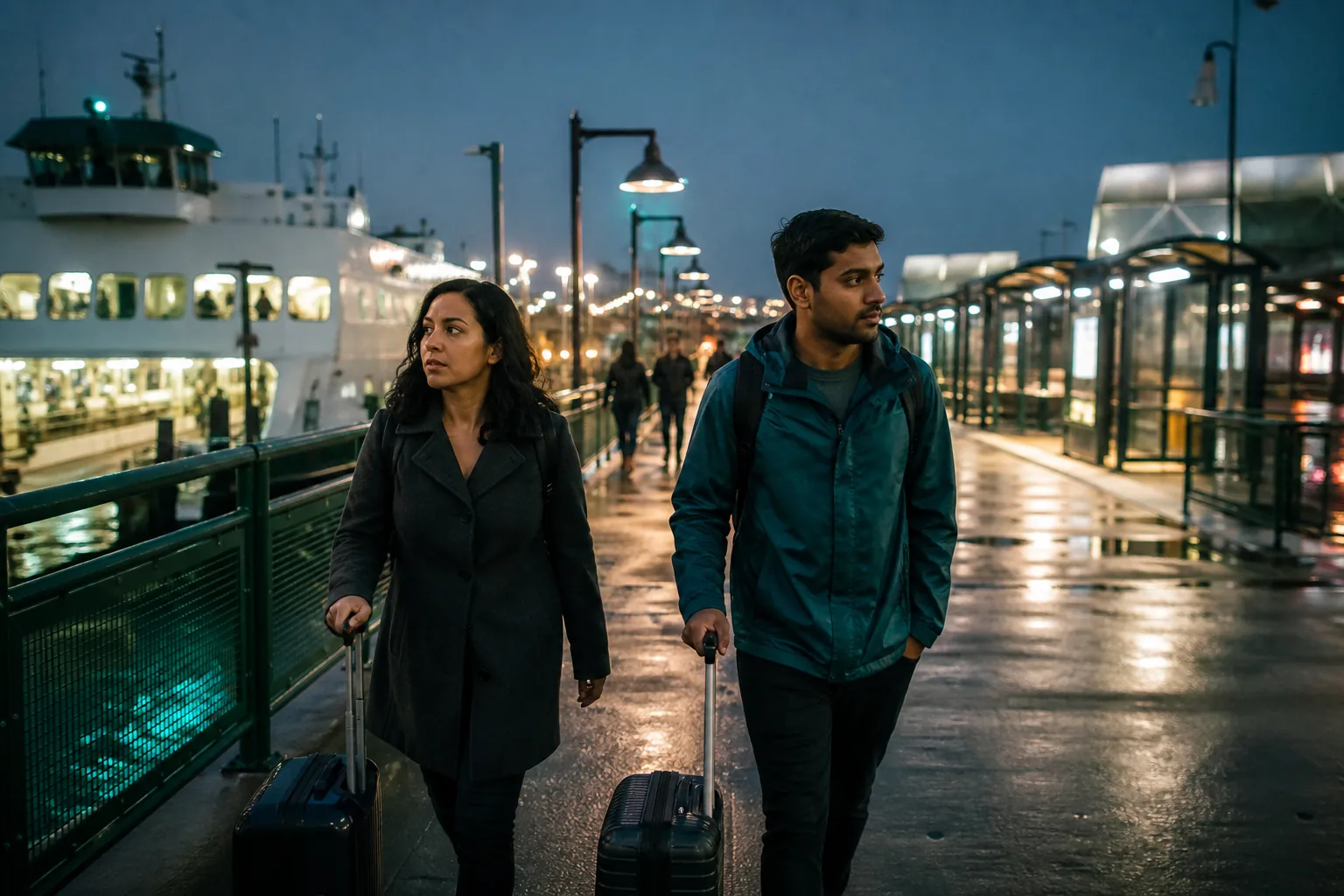
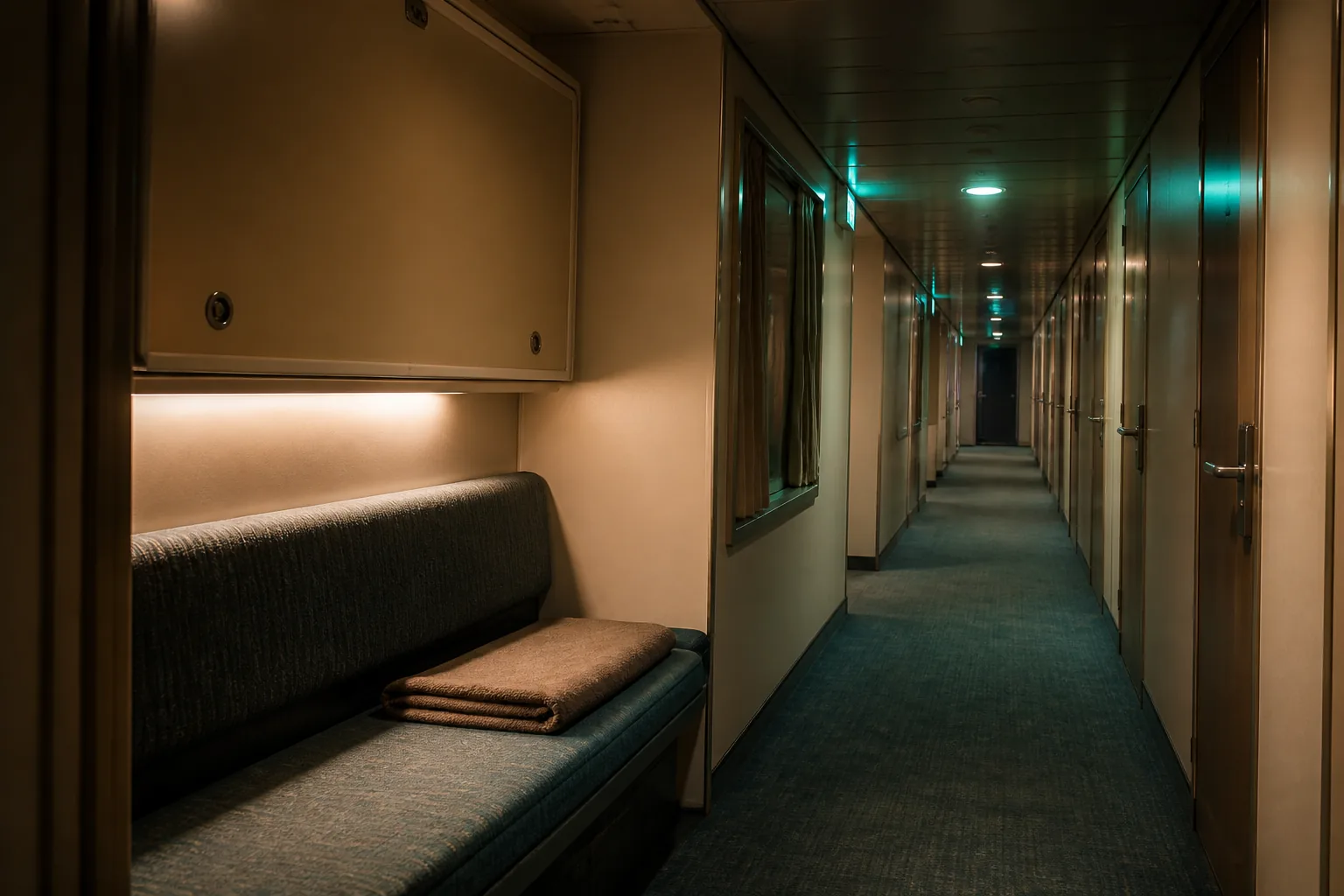
Night crossings add cabin doors, dim corridors, and early-morning arrivals that push you straight into a land transfer. That stack of tasks is manageable once you already know how boarding feels. For a first rehearsal, keep the variables small: one short crossing, one bag strategy, one clear plan for leaving the pier.
“A calm first sailing is the one that teaches the system, not the one that tests every limit at once.”
What to rehearse before you leave for the pier
Preparation starts the evening before, not at the terminal door. Confirm the live sailing, not an old PDF. Note the foot-passenger check-in window and the walking time from your last land stop to the pier entrance. Pack a small bag you can keep with you, and leave bulkier items in a way that does not block your hands on the ramp.
- Verify the sailing on the operator’s current board or site and write down the boarding window you will actually follow.
- Map the walk or ride to the pier with a buffer that absorbs a slow ticket line or a wrong entrance.
- Decide what stays in your hand bag: water, layers, documents, and anything you will not want to dig from a deep suitcase.
- Choose a simple seating plan: salon for shelter, deck for air, or a mix once you see how the vessel feels underway.
- Sketch the exit: which end of the ship people leave from, and where the first land connection sits relative to the ramp.
Arrival windows that actually matter on foot
Foot passengers often arrive later than vehicle traffic, but “later” is not the last minute. Terminals still need time to check tickets, count people, and close the gate. Arriving inside the published window keeps you out of the stress of watching the ramp lift while you are still looking for the correct door.
If you travel with a bicycle, treat the timing closer to vehicle check-in. Bike lanes move on their own clock, and crews prefer riders who are ready when called rather than still packing straps at the last moment. Practice clipping gear before you reach the front of the line.
What to watch while you wait
Use the waiting time. Notice where announcements come from, which doors open first, and whether staff send people to an upper or lower deck. Those cues shorten confusion later when the crowd moves quickly.
Onboard: motion, seating, and small comforts
Once underway, give yourself twenty quiet minutes to look around. Walk a short loop if the deck is open and safe. Sit where the motion feels softer. Note drafts near doors and warmer pockets deeper in the salon. This is the information you will reuse on longer days when you need rest instead of exploration.
- Keep a light layer reachable; wind on deck feels colder than the forecast on shore.
- Drink water and avoid packing your only snack in an inaccessible bag.
- Choose a seat with a clear path to toilets and exits.
- Store bags where they do not block doors or shared seating.
- Listen for docking instructions early so you are not packing while the crowd stands up.
Leaving the pier without losing the lesson
Docking is where first-time travelers start to rush. Resist that. Stand when asked, keep your bag close, and follow the marked foot path instead of cutting through vehicle lanes. Once outside, pause long enough to orient yourself: bus bay, taxi stand, or walking route into town. Write one short note while the memory is fresh — boarding felt early or late, motion was mild or sharp, exit was clear or crowded.
That note becomes your personal checklist for the next sailing. Only after a calm daytime rehearsal does an overnight crossing make sense as a planned step rather than a leap.
If you want help choosing a first route that fits your wider itinerary, myzxintptz can review timing, boarding style, and the land connection that follows so your rehearsal day stays useful instead of exhausting.
Common first-crossing mistakes to avoid
Most problems on a first daytime ferry come from haste and from treating the pier like an airport with identical rules. Ferries vary. Some call foot passengers early; others hold them until vehicles are nearly finished. Some open decks feel welcoming; others are wet and windy enough that the salon is the only comfortable option. Assume nothing from a photo you saw online.
Another frequent mistake is packing as if the ship has a locker you can trust mid-crossing. Keep essentials with you. If you need medicine, a charger, or a dry layer, it belongs in the bag on your shoulder, not in a case you will not see until docking.
Travelers also underestimate how quickly a short crossing can still tire them. Standing in a queue, climbing stairs, and watching bags leave less energy for the land transfer. Eat something simple beforehand. Arrive hydrated. Give yourself permission to sit and observe instead of touring every deck.
Finally, do not stack a tight city appointment immediately after your first sailing. Leave open time after docking so you can learn from the exit path without sprinting. The rehearsal works only if you have room to notice what happened.
A simple post-crossing review
When you reach your next stop, spend five minutes on a short review. Write what felt clear and what felt confusing. Note whether the arrival window was generous or tight. Record where you sat and whether you would choose that spot again. These notes are more valuable than generic tips because they belong to the vessel and pier you actually used.
Share the notes with anyone traveling with you next time. Agree on one improvement: an earlier arrival, a different bag setup, or a clearer meeting point on deck. Small adjustments compound. By the second or third water leg, boarding feels ordinary — which is exactly when longer or overnight sailings become reasonable to consider.
A calm first daytime ferry is not a lesser journey. It is the foundation that keeps later crossings practical. Treat it with the same seriousness you would give a complex transfer, and the water part of your route becomes a skill you can reuse instead of a source of dread.
Keep your expectations honest. A short daytime ferry will not teach you every seasonal quirk of a long overnight route, but it will teach the physical grammar of water travel: queues, motion, announcements, and exits. Once that grammar feels familiar, you can add complexity without stacking fear on top of logistics.
If weather looks unsettled on your rehearsal day, consider shifting to another daytime sailing rather than forcing the crossing in rough conditions. Learning is harder when you are cold, tense, and unsure whether the sailing will hold. Choose conditions that let you observe.
Bring patience for other travelers too. First crossings attract people who are also figuring out the system. Leave space on benches, keep aisles clear, and follow crew instructions even when the crowd presses forward. Good pier manners make boarding faster for everyone and give you a clearer view of how the process is supposed to work.